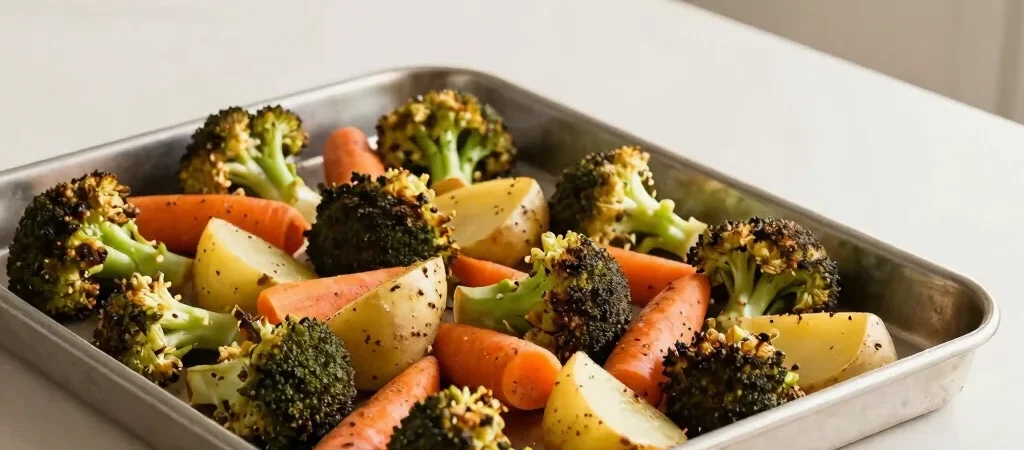
A tray of vegetables can come out crisp at the edges—or crowded, pale, and soft. The difference usually has less to do with a special seasoning than with how you cut the vegetables, how much space they get, and when they go into the oven.
Give the pan some room
Heat the oven to 425°F and cut vegetables into pieces that are close in size. Toss them with enough oil to lightly coat, then spread them in a single layer on a rimmed sheet pan.
If the pieces are touching all over, use a second pan. Crowding traps moisture, so vegetables steam before their surfaces have a chance to brown.
Match cuts to cooking time
Potatoes and thick carrot pieces take longer than broccoli florets or sliced bell pepper. For one mixed tray, cut the firmer vegetables smaller, or give them a head start in the oven before adding quicker-cooking vegetables.
Check the tray after about 20 minutes, then keep roasting until the vegetables are tender and browned where they touch the pan. Exact timing depends on the size of the pieces and the pan, so a fork and a quick look are more useful than a rigid timer.
Season before and after
Salt, pepper, and oil are enough to get started. Add dried herbs before roasting, but save delicate fresh herbs, lemon juice, or grated Parmesan for after the vegetables come out so their flavors stay clear.
Serve the tray beside eggs, chicken, or beans, or add the leftovers to a grain bowl the next day. Once you learn how spacing and size affect the result, roasting becomes a dependable way to use whatever vegetables are on hand.